But I will say that if we have a pope who will demonstrate through example that appearance matters less than internal disposition, then it stikes me that that is exactly what our current image-obsessed culture needs. And people think God doesn't know what He's doing.I'm not a traddie myself. I have sympathy for them, and I think they're doing good things for the Church -- the liturgy IS important. I also think that while the Extraordinary Form probably isn't important to Papa Francis the way it is to Papa Ben, he has no history of hostility towards it, and I don't see any reason why he'd approve of any either. I offer the concerned traditionalists some advice from St. Padre Pio: "Pray, hope, and don't worry. Worry is useless. God is merciful and will hear your prayer." And from myself: be open to how the Spirit will use Papa Francis.
Showing posts with label conversion. Show all posts
Showing posts with label conversion. Show all posts
Tuesday, April 2, 2013
Blogrollin' #109 (I checked)
I found Charming Disarray's traditionalist post on Papa Francis through Pentimento. The great bit is at the end:


Friday, June 1, 2012
Since It's An Election Year Again....
I wish to revisit some of the posts I made the last time around.
First Principles
The Vital Issue
Just Look
Of these three, I really think "The Vital Issue" is the best.
First Principles
The Vital Issue
Just Look
Of these three, I really think "The Vital Issue" is the best.
Saturday, April 14, 2012
To Aid Pornchai Maximillian Moontri
If you do not read These Stone Walls, you should. Fr. Gordon Macrae is a very compelling writer.
This week, Fr. Gordon has a guest poster -- his cellmate, Pornchai Maximillian Moontri, a recent convert to Holy Mother Church. He may be released shortly from prison. When this happens, he will be immediately deported to Thailand, the land of his birth. He knows nobody there. Those who have said before that they would help him when he arrives there have not communicated recently.
I ask any of my readers who have any contact within Thailand to make use of them. See if you can find any help for Pornchai where he has to go. If you do, contact Fr. Gordon. Even if you can't, please spread this message. Somebody somewhere knows somebody who can extend to Pornchai the Christian charity he needs.
This week, Fr. Gordon has a guest poster -- his cellmate, Pornchai Maximillian Moontri, a recent convert to Holy Mother Church. He may be released shortly from prison. When this happens, he will be immediately deported to Thailand, the land of his birth. He knows nobody there. Those who have said before that they would help him when he arrives there have not communicated recently.
I ask any of my readers who have any contact within Thailand to make use of them. See if you can find any help for Pornchai where he has to go. If you do, contact Fr. Gordon. Even if you can't, please spread this message. Somebody somewhere knows somebody who can extend to Pornchai the Christian charity he needs.
Thursday, October 13, 2011
Blogrollin' again
I first found this article (source) echoed on John C. Wright's livejournal. Like him, I don't see how I can do any better than to repeat it in its entirety.
What is Poverty?But enough about what I think. What do y'all think?
Theodore Dalrymple
What do we mean by poverty? Not what Dickens or Blake or Mayhew meant. Today, no one seriously expects to go hungry in England or to live without running water or medical care or even TV. Poverty has been redefined in industrial countries, so that anyone at the lower end of the income distribution is poor ex officio, as it were—poor by virtue of having less than the rich. And of course by this logic, the only way of eliminating poverty is by an egalitarian redistribution of wealth—even if the society as a whole were to become poorer as a result.
Such redistribution was the goal of the welfare state. But it has not eliminated poverty, despite the vast sums expended, and despite the fact that the poor are now substantially richer—indeed are not, by traditional standards, poor at all. As long as the rich exist, so must the poor, as we now define them.
Certainly they are in squalor—a far more accurate description of their condition than poverty—despite a threefold increase in per-capita income, including that of the poor, since the end of the last war. Why they should be in this condition requires an explanation—and to call that condition poverty, using a word more appropriate to Mayhew's London than to today's reality, prevents us from grasping how fundamentally the lot of "the poor" has changed since then. The poor we shall always have with us, no doubt: but today they are not poor in the traditional way.
The English poor live shorter and less healthy lives than their more prosperous compatriots. Even if you didn't know the statistics, their comparative ill health would be obvious on the most casual observation of rich and slum areas, just as Victorian observers noted that the poor were on average a head shorter than the rich, due to generations of inferior nourishment and hard living conditions. But the reasons for today's difference in health are not economic. It is by no means the case that the poor can't afford medicine or a nourishing diet; nor do they live in overcrowded houses lacking proper sanitation, as in Mayhew's time, or work 14 backbreaking hours a day in the foul air of mines or mills. Epidemiologists estimate that the higher rate of cigarette consumption among the poor accounts for half the difference in life expectancy between the richest and poorest classes in England—and to smoke that much takes money.
Notoriously, too, the infant mortality rate is twice as high in the lowest social class as in the highest. But the infant mortality rate of illegitimate births is twice that of legitimate ones, and the illegitimacy rate rises steeply as you descend the social scale: so the decline of marriage almost to the vanishing point in the lowest social class might well be responsible for most of its excess infant mortality. It is a way of life, not poverty per se, that kills. The commonest cause of death between the ages of 15 and 44 is now suicide, which has increased most precipitously precisely among those who live in the underclass world of temporary step-parenthood and of conduct unrestrained either by law or convention.
Just as it is easier to recognize ill health in someone you haven't seen for some time rather than in someone you meet daily, so a visitor coming into a society from elsewhere often can see its character more clearly than those who live in it. Every few months, doctors from countries like the Philippines and India arrive fresh from the airport to work for a year's stint at my hospital. It is fascinating to observe their evolving response to British squalor.
At the start, they are uniformly enthusiastic about the care that we unsparingly and unhesitatingly give to everyone, regardless of economic status. They themselves come from cities—Manila, Bombay, Madras—where many of the cases we see in our hospital would simply be left to die, often without succor of any kind. And they are impressed that our care extends beyond the merely medical: that no one goes without food or clothing or shelter, or even entertainment. There seems to be a public agency to deal with every conceivable problem. For a couple of weeks, they think this all represents the acme of civilization, especially when they recall the horrors at home. Poverty—as they know it— has been abolished.
Before very long, though, they start to feel a vague unease. A Filipina doctor, for example, asked me why so few people seemed grateful for what was done for them. What prompted her question was an addict who, having collapsed from an accidental overdose of heroin, was brought to our hospital. He required intensive care to revive him, with doctors and nurses tending him all night. His first words to the doctor when he suddenly regained consciousness were, "Get me a fucking roll-up" (a hand-rolled cigarette). His imperious rudeness didn't arise from mere confusion: he continued to treat the staff as if they had kidnapped him and held him in the hospital against his will to perform experiments upon him. "Get me the fuck out of here!" There was no acknowledgment of what had been done for him, let alone gratitude for it. If he considered that he had received any benefit from his stay at all, well, it was simply his due.
My doctors from Bombay, Madras, or Manila observe this kind of conduct open- mouthed. At first they assume that the cases they see are a statistical quirk, a kind of sampling error, and that given time they will encounter a better, more representative cross section of the population. Gradually, however, it dawns upon them that what they have seen is representative. When every benefit received is a right, there is no place for good manners, let alone for gratitude.
Case after case causes them to revise their initial favorable opinion. Before long, they have had experience of hundreds, and their view has changed entirely. Last week, for example, to the amazement of a doctor recently arrived from Madras, a woman in her late twenties entered our hospital with the most common condition that brings patients to us: a deliberate overdose. At first she would say nothing more than that she wanted to depart this world, that she had had enough of it.
I inquired further. Just before she took the overdose, her ex-boyfriend, the father of her eight-month-old youngest child (now staying with her ex-boyfriend's mother), had broken into her apartment by smashing down the front door. He wrecked the apartment's contents, broke every window, stole $110 in cash, and ripped out her telephone.
"He's very violent, doctor." She told me that he had broken her thumb, her ribs, and her jaw during the four years she was with him, and her face had needed stitching many times. "Last year I had to have the police out to him."
"What happened?"
"I dropped the charges. His mother said he would change."
Another of her problems was that she was now five weeks pregnant and she didn't want the baby.
"I want to get rid of it, doctor."
"Who's the father?"
It was her violent ex-boyfriend, of course.
"Did he rape you, then?"
"No."
"So you agreed to have sex with him?"
"I was drunk; there was no love in it. This baby is like a bolt out of the blue: I don't know how it happened."
I asked her if she thought it was a good idea to have sex with a man who had repeatedly beaten her up, and from whom she said she wished to separate.
"It's complicated, doctor. That's the way life goes sometimes."
What had she known of this man before she took up with him? She met him in a club; he moved in at once, because he had nowhere else to stay. He had a child by another woman, neither of whom he supported. He had been in prison for burglary. He took drugs. He had never worked, except for cash on the side. Of course he never gave her any of his money, instead running up her telephone bills vertiginously.
She had never married, but had two other children. The first, a daughter aged eight, still lived with her. The father was a man whom she left because she found he was having sex with 12-year-old girls. Her second child was a son, whose father was "an idiot" with whom she had slept one night. That child, now six, lived with the "idiot," and she never saw him.
What had her experience taught her?
"I don't want to think about it. The Housing'll charge me for the damage, and I ain't got the money. I'm depressed, doctor; I'm not happy. I want to move away, to get away from him."
Later in the day, feeling a little lonely, she telephoned her ex-boyfriend, and he visited her.
I discussed the case with the doctor who had recently arrived from Madras, and who felt he had entered an insane world. Not in his wildest dreams had he imagined it could be like this. There was nothing to compare with it in Madras. He asked me what would happen next to the happy couple.
"They'll find her a new flat. They'll buy her new furniture, television, and refrigerator, because it's unacceptable poverty in this day and age to live without them. They'll charge her nothing for the damage to her old flat, because she can't pay anyway, and it wasn't she who did it. He will get away scot-free. Once she's installed in her new flat to escape from him, she'll invite him there, he'll smash it up again, and then they'll find her somewhere else to live. There is, in fact, nothing she can do that will deprive her of the state's obligation to house, feed, and entertain her."
I asked the doctor from Madras if poverty was the word he would use to describe this woman's situation. He said it was not: that her problem was that she accepted no limits to her own behavior, that she did not fear the possibility of hunger, the condemnation of her own parents or neighbors, or God. In other words, the squalor of England was not economic but spiritual, moral, and cultural.
I often take my doctors from the Third World on the short walk from the hospital to the prison nearby. It is a most instructive 800 yards. On a good day—good for didactic purposes, that is—there are seven or eight puddles of glass shattered into fragments lying in the gutter en route (there are never none, except during the most inclement weather, when even those most addicted to car theft control their impulses).
"Each of these little piles of smashed glass represents a car that has been broken into," I tell them. "There will be more tomorrow, weather permitting." The houses along the way are, as public housing goes, quite decent. The local authorities have at last accepted that herding people into giant, featureless, Le Corbusian concrete blocks was a mistake, and they have switched to the construction of individual houses. Only a few of their windows are boarded up. Certainly by comparison with housing for the poor in Bombay, Madras, or Manila they are spacious and luxurious indeed. Each has a little front yard of grass, surrounded by a hedge, and a much larger back yard; about half have satellite dishes. Unfortunately, the yards are almost as full of litter as municipal garbage dumps.
I tell my doctors that in nearly nine years of taking this walk four times a week, I have never seen a single instance of anyone attempting to clean his yard. But I have seen much litter dropped; on a good day, I can even watch someone standing at the bus stop dropping something on the ground no farther than two feet from the bin.
"Why don't they tidy up their gardens?" asks a doctor from Bombay.
A good question: after all, most of the houses contain at least one person with time on his or her hands. Whenever I have been able to ask the question, however, the answer has always been the same: I've told the council [the local government] about it, but they haven't come. As tenants, they feel it is the landlord's responsibility to keep their yards clean, and they are not prepared to do the council's work for it, even if it means wading through garbage—as it quite literally does. On the one hand, authority cannot tell them what to do; on the other, it has an infinitude of responsibilities towards them.
I ask my Third World doctors to examine the litter closely. It gives them the impression that no Briton is able to walk farther than ten yards or so without consuming junk food. Every bush, every lawn, even every tree, is festooned with chocolate wrappers or fast- food packaging. Empty cans of beer and soft drinks lie in the gutter, on the flower beds, or on top of the hedges. Again, on a good day we actually see someone toss aside the can whose contents he has just consumed, as a Russian vodka drinker throws down his glass.
Apart from the antisocial disregard of the common good that each little such act of littering implies (hundreds a week in the space of 800 yards alone), the vast quantity of food consumed in the street has deeper implications. I tell the doctors that in all my visits to the white households in the area, of which I've made hundreds, never—not once—have I seen any evidence of cooking. The nearest to this activity that I have witnessed is the reheating of prepared and packaged food, usually in a microwave. And by the same token, I have never seen any evidence of meals taken in common as a social activity—unless two people eating hamburgers together in the street as they walk along be counted as social.
This is not to say that I haven't seen people eating at home; on the contrary, they are often eating when I arrive. They eat alone, even if other members of the household are present, and never at table; they slump on a sofa in front of the television. Everyone in the household eats according to his own whim and timetable. Even in so elementary a matter as eating, therefore, there is no self-discipline but rather an imperative obedience to impulse. Needless to say, the opportunity for conversation or sociality that a meal taken together provides is lost. English meals are thus solitary, poor, nasty, brutish, and short.
I ask the doctors to compare the shops in areas inhabited by poor whites and those where poor Indian immigrants live. It is an instructive comparison. The shops the Indians frequent are piled high with all kinds of attractive fresh produce that, by supermarket standards, is astonishingly cheap. The women take immense trouble over their purchases and make subtle discriminations. There are no pre-cooked meals for them. By contrast, a shop that poor whites patronize offers a restricted choice, largely of relatively expensive prepared foods that at most require only the addition of hot water.
The difference between the two groups cannot be explained by differences in income, for they are insignificant. Poverty isn't the issue. And the willingness of Indians to take trouble over what they eat and to treat meals as important social occasions that impose obligations and at times require the subordination of personal desire is indicative of an entire attitude to life that often permits them, despite their current low incomes, to advance up the social scale. Alarmingly, though, the natural urge of the children of immigrants to belong to the predominant local culture is beginning to create an Indian underclass (at least among young males): and the taste for fast food and all that such a taste implies is swiftly developing among them.
When such slovenliness about food extends to all other spheres of life, when people satisfy every appetite with the same minimal effort and commitment, no wonder they trap themselves in squalor. I have little trouble showing my doctors from India and the Philippines that most of our patients take a fast-food approach to all their pleasures, obtaining them no less fleetingly and unstrenuously. They have no cultural activity they can call their own, and their lives seem, even to them, empty of purpose. In the welfare state, mere survival is not the achievement that it is, say, in the cities of Africa, and therefore it cannot confer the self-respect that is the precondition of self-improvement.
By the end of three months my doctors have, without exception, reversed their original opinion that the welfare state, as exemplified by England, represents the acme of civilization. On the contrary, they see it now as creating a miasma of subsidized apathy that blights the lives of its supposed beneficiaries. They come to realize that a system of welfare that makes no moral judgments in allocating economic rewards promotes antisocial egotism. The spiritual impoverishment of the population seems to them worse than anything they have ever known in their own countries. And what they see is all the worse, of course, because it should be so much better. The wealth that enables everyone effortlessly to have enough food should be liberating, not imprisoning. Instead, it has created a large caste of people for whom life is, in effect, a limbo in which they have nothing to hope for and nothing to fear, nothing to gain and nothing to lose. It is a life emptied of meaning.
"On the whole," said one Filipino doctor to me, "life is preferable in the slums of Manila." He said it without any illusions as to the quality of life in Manila.
These doctors have made the same journey as I, but in the reverse direction. Arriving as a young doctor in Africa 25 years ago, I was horrified at first by the physical conditions, the like of which I had never experienced before. Patients with heart failure walked 50 miles in the broiling sun, with panting breath and swollen legs, to obtain treatment—and then walked home again. Ulcerating and suppurating cancers were common. Barefoot men contracted tetanus from the wounds inflicted by a sand flea that laid its eggs between their toes. Tuberculosis reduced people to animated skeletons. Children were bitten by puff adders and adults mauled by leopards. I saw lepers with noses that had rotted away and madmen who wandered naked in the torrential rains.
Even the accidents were spectacular. I treated the survivors of one in Tanzania in which a truck—having no brakes, as was perfectly normal and expected in the circumstances— began to slide backward down a hill it had been climbing. It was laden with bags of corn, upon which 20 passengers, including many children, were riding. As the truck slid backward, first the passengers, then the corn, fell off. By the time I arrived, ten dead children were lined up by the side of the road, arranged in ascending order as neatly as organ pipes. They had been crushed or suffocated by the bags of corn that fell on top of them: a grimly ironic death in a country chronically short of food.
Moreover, political authority in the countries in which I worked was arbitrary, capricious, and corrupt. In Tanzania, for example, you could tell the representative of the sole and omnipotent political party, the Party of the Revolution, by his girth alone. Tanzanians were thin, but party men were fat. The party representative in my village sent a man to prison because the man's wife refused to sleep with him. In Nigeria the police hired out their guns by night to the armed robbers.
Yet nothing I saw—neither the poverty nor the overt oppression—ever had the same devastating effect on the human personality as the undiscriminating welfare state. I never saw the loss of dignity, the self-centeredness, the spiritual and emotional vacuity, or the sheer ignorance of how to live, that I see daily in England. In a kind of pincer movement, therefore, I and the doctors from India and the Philippines have come to the same terrible conclusion: that the worst poverty is in England—and it is not material poverty but poverty of soul.
Wednesday, June 22, 2011
On Fr. Corapi
Only three really good things have been said on the matter.
First, Father Zuhlsdorf of What Does the Prayer Really Say? reminded us that a lot of what is being said is uncharitable, we don't really know the truth, and the best we can do is pray for all of those involved.
Mark Shea has decided to be quiet about it, and he has good reasons for this choice.
Jennifer Fulwiler reminds us: We don't have to worry about his previous teachings. I suggest that going forward, we may wish to examine them for an imprimatur before heeding them.
Mary Help of Sinners, pray for us!
Edit: and now a fourth, from Fr. Gordon Macrae.
First, Father Zuhlsdorf of What Does the Prayer Really Say? reminded us that a lot of what is being said is uncharitable, we don't really know the truth, and the best we can do is pray for all of those involved.
Mark Shea has decided to be quiet about it, and he has good reasons for this choice.
Jennifer Fulwiler reminds us: We don't have to worry about his previous teachings. I suggest that going forward, we may wish to examine them for an imprimatur before heeding them.
Mary Help of Sinners, pray for us!
Edit: and now a fourth, from Fr. Gordon Macrae.
Wednesday, April 6, 2011
On Fr. Corapi
I'm not really very familiar with Fr. Corapi. I've seen the video of his conversion story/ testimonial regarding Reconciliation. (Search Fr. Corapi's conversion on YouTube; you'll find it.) But I am aware of a lot of people who dearly love his preaching.
Obviously, I'm writing about the accusations made against him. What do I (or anyone not involved in the case) actually know?
Nothing.
Is it possible he's guilty? Of course; consider the case of Fr. Thomas Euteneuer, another priest noted for holiness with a pretty broad following, who confessed to some wrongdoing.
Is it possible he's innocent? Absolutely. My inclination is to think that his innocence is more believable than his guilt. And unlike Fr. Euteneuer, he claims innocence.
By all means, the best advice is that Fr. Corapi gave in his adamant denial of guilt: pray for ALL of those involved.
Entirely a propos of this, Fr. Gordon MacRae has a post about this. Fr. MacRae knows full well what happens when you fight this sort of allegation. Also a propos is this 2003 article, by a man who ought to know more about what goes on in court when one of the clergy is accused. I urge you to go and read them both.
Obviously, I'm writing about the accusations made against him. What do I (or anyone not involved in the case) actually know?
Nothing.
Is it possible he's guilty? Of course; consider the case of Fr. Thomas Euteneuer, another priest noted for holiness with a pretty broad following, who confessed to some wrongdoing.
Is it possible he's innocent? Absolutely. My inclination is to think that his innocence is more believable than his guilt. And unlike Fr. Euteneuer, he claims innocence.
By all means, the best advice is that Fr. Corapi gave in his adamant denial of guilt: pray for ALL of those involved.
Entirely a propos of this, Fr. Gordon MacRae has a post about this. Fr. MacRae knows full well what happens when you fight this sort of allegation. Also a propos is this 2003 article, by a man who ought to know more about what goes on in court when one of the clergy is accused. I urge you to go and read them both.
Monday, March 21, 2011
I love the Rev. Know-It-All
Here's a man I admire, because he has taken his stand for a liturgy by the rubrics. More importantly still, he has stood up for the life of the unborn. More important still, he has stood up for valid theology. See it all in Part 19 of A Short History of the Hootenanny Mass. I can recommend the entire series with a whole heart.
You may wish to argue my priorities. I agree with Father Z, good liturgy is good for the world. But lives are more important than good liturgy. And the truth about God is the most important thing in the world.
You may wish to argue my priorities. I agree with Father Z, good liturgy is good for the world. But lives are more important than good liturgy. And the truth about God is the most important thing in the world.
Wednesday, March 16, 2011
EUREKA!!
One of my heroes is Dr. Stanley Williams, PhD. When his series, "Trying to Fly With One Wing" was posted at Catholic Exchange, I was enthralled. I sought it eagerly, as it seemed one of the finest bits of apologetics I had ever encountered. Eventually it disappeared from CE, and then from the entire web, as far as I could tell.
But now I have found it again! First at CatholicLane, where they are up to part 4, and then after some googling, on a blog devoted entirely to the series. I am thrilled to find it available once again, and I'm making sure it's in my sidebars.
But now I have found it again! First at CatholicLane, where they are up to part 4, and then after some googling, on a blog devoted entirely to the series. I am thrilled to find it available once again, and I'm making sure it's in my sidebars.
Saturday, December 19, 2009
Blogrollin'
On the off chance that there are any readers who prefer my blog to Fr. Dwight Longenecker's, what is wrong with you?
I never come up with truly fabulous things like this.
I never come up with truly fabulous things like this.
Thursday, October 22, 2009
Papa Ben and The Anglican Church
Papa Ben understands well that the future direction of the Church is found in the attitudes of her bishops. So his primary and most important reform is appointing good, faithful, and orthodox bishops. See this article, which details some of his efforts.
But he is doing more than that. With the new apostolic constitution providing Personal Ordinariates for converts from the Church of England (Inside the Vatican Article), he is also deliberately marginalizing heterodox bishops. And I approve of his desire to do so.
Now, I can forsee the possibility that these Personal Ordinariates could one day protect heterodoxy, but if that happens, then the Pope (whoever it is by then) can eliminate them.
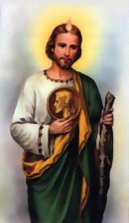
Most of the interesting commentary regarding the new apostolic constitution that I've read is at Fr. Longenecker's blog. One thing that he said that I think is MOST appropriate, is that we should all pray for God's grace to flood over this process. St. Jude, we thought for so long that this day could never come. Remind us that with God, all things are possible, and pray for us all!
I don't have time to keep up with Father Z over at What Does The Prayer Really Say, but he has a lot to say, and more commenters than Father Dwight.
But he is doing more than that. With the new apostolic constitution providing Personal Ordinariates for converts from the Church of England (Inside the Vatican Article), he is also deliberately marginalizing heterodox bishops. And I approve of his desire to do so.
Now, I can forsee the possibility that these Personal Ordinariates could one day protect heterodoxy, but if that happens, then the Pope (whoever it is by then) can eliminate them.
Most of the interesting commentary regarding the new apostolic constitution that I've read is at Fr. Longenecker's blog. One thing that he said that I think is MOST appropriate, is that we should all pray for God's grace to flood over this process. St. Jude, we thought for so long that this day could never come. Remind us that with God, all things are possible, and pray for us all!
I don't have time to keep up with Father Z over at What Does The Prayer Really Say, but he has a lot to say, and more commenters than Father Dwight.
Monday, September 14, 2009
Pray for Reform
via Catholic Exchange.
Fr. Frank Pavone of Priests for Life has asked that we pray that health care reform actually support human dignity, rather than being an offense against it. See this page on the Priests for Life site; in addition to praying for health care reform, you can offer up your rosaries for the conversion of President Obama. If you use facebook (I don't), you can also use the Facebook Page of his cause.
Fr. Frank Pavone of Priests for Life has asked that we pray that health care reform actually support human dignity, rather than being an offense against it. See this page on the Priests for Life site; in addition to praying for health care reform, you can offer up your rosaries for the conversion of President Obama. If you use facebook (I don't), you can also use the Facebook Page of his cause.
Wednesday, April 30, 2008
Testing for God
Jennifer F. has been taking part in a series of interviews on The Cynical Christian. In the second interview, she laments the lack of logical proofs used to evangelize atheists, but also says that she doesn't think that there is much anyone can say to convince an atheist. In this post she speaks more about effective witness, and how it is more important to live a life of charity than to marshal effective arguments.
I would say, rather, that no argument from reason will be convincing if not made with love. But if your heart and life are conformed to Christ, you might suggest one of the Ten Prayers God Always Says Yes To, in this case, "God, Prove to me that you exist."
Here is how I think it ought to be set up: "You're a person of reason, right? So among other things, you have to admit that you don't know everything and could be wrong, and you want to know the truth, no matter what it is, right? You've asked me to prove God's existence to you, and you're right, that I can't. But God can.
"Well, let's presume that the God that the Catholic Church proclaims is real. That is, He loves us all without limit or exception, knows everything, can do whatever He wants, and made us to know Him as well as we are able, and love Him as much as we can. Now, if all of those things are true, you can test for His existence.
"Silently, within the vaults of your mind, say to Him, 'God, I've heard the claims that the Catholic Church has made about you, and I don't believe it. It's utterly ridiculous. Prove to me that I am wrong.'
"Now, if He does not do this for an honest seeker of the truth, it means one or more of the following things:
If this test would be convincing, it would be from God's work, and not my own.
I would say, rather, that no argument from reason will be convincing if not made with love. But if your heart and life are conformed to Christ, you might suggest one of the Ten Prayers God Always Says Yes To, in this case, "God, Prove to me that you exist."
Here is how I think it ought to be set up: "You're a person of reason, right? So among other things, you have to admit that you don't know everything and could be wrong, and you want to know the truth, no matter what it is, right? You've asked me to prove God's existence to you, and you're right, that I can't. But God can.
"Well, let's presume that the God that the Catholic Church proclaims is real. That is, He loves us all without limit or exception, knows everything, can do whatever He wants, and made us to know Him as well as we are able, and love Him as much as we can. Now, if all of those things are true, you can test for His existence.
"Silently, within the vaults of your mind, say to Him, 'God, I've heard the claims that the Catholic Church has made about you, and I don't believe it. It's utterly ridiculous. Prove to me that I am wrong.'
"Now, if He does not do this for an honest seeker of the truth, it means one or more of the following things:
- He doesn't care.
- He doesn't know.
- He can't prove it.
- He doesn't exist.
- Or, the seeker doesn't really want Him to prove His existence to you.
If this test would be convincing, it would be from God's work, and not my own.
Thursday, April 10, 2008
Mafia Discourse and the Church Militant
This post is going to ramble. Once again, I've seen a number of things online that just seem to tie together.
This article was on the front page of Catholic Exchange today; in it, Dr. Stanley Williams takes Sean Hannity to task for his use of what Eric Scheske once called "mafia discourse tactics" (and on Fr. Thomas Eutener, at that)! It seems to me that all too often, such tactics are used to avoid the truth.
Then I found a link to this post by Adoro te Devote. She goes on at length about what it means to be a confirmed Catholic -- it means we've volunteered to be part of the Church Militant, to go into spiritual and rhetorical battle to defend and promote the Faith. But she also expounds on the way we are to do this: with caritas. St Paul tells us that without caritas, all other gifts of the Spirit are nothing.
I don't mean to suggest that there is no place for all-out warfare. There are cases where our opponents clearly intend nothing less than our complete destruction, and doing whatever it takes to stop them is called for by the Church. (The Caveman makes the case for executions here, and provides an example of when warfare is so justified.) But such cases are rare. I think the Church is better served by initially giving others the benefit of the doubt, and not presuming hostility before it has been demonstrated.
This article was on the front page of Catholic Exchange today; in it, Dr. Stanley Williams takes Sean Hannity to task for his use of what Eric Scheske once called "mafia discourse tactics" (and on Fr. Thomas Eutener, at that)! It seems to me that all too often, such tactics are used to avoid the truth.
Then I found a link to this post by Adoro te Devote. She goes on at length about what it means to be a confirmed Catholic -- it means we've volunteered to be part of the Church Militant, to go into spiritual and rhetorical battle to defend and promote the Faith. But she also expounds on the way we are to do this: with caritas. St Paul tells us that without caritas, all other gifts of the Spirit are nothing.
I don't mean to suggest that there is no place for all-out warfare. There are cases where our opponents clearly intend nothing less than our complete destruction, and doing whatever it takes to stop them is called for by the Church. (The Caveman makes the case for executions here, and provides an example of when warfare is so justified.) But such cases are rare. I think the Church is better served by initially giving others the benefit of the doubt, and not presuming hostility before it has been demonstrated.
Saturday, March 1, 2008
Spiritual malaise
One of the most powerful things about the Internet and hypertext markup language is how easy it becomes to connect things.
Like many and perhaps most libertarians, I loathe the War on Drugs (one of several Wars On Rights our government is waging). I find it impossible to credit the idea that making marijuana, opiates, and cocaine illegal has done more good than harm. Criminalizing has had a neglible impact on demand, but has made satisfying that demand so profitable (by driving up the price) that the market can bear even the expenses associated with the businesses all being run by criminals, many of them drug-addled.
Ann Landers once asked a very perceptive question regarding the War on Drugs: "The real question is why are millions of people so unhappy, so bored, so unfulfilled, that they are willing to drink, snort, inject or inhale any substance that might blot out reality and give them a bit of temporary relief." And people do this regardless of the facts that the risks are just about unreal, and the primary result of indulging in recreational pharmacology is to make you stupid. I've been sort of asking myself this question for years, long before my reversion to mere Christianity or to the Catholic Church. As a libertarian, I tended to blame the lack of liberty.
I ought to have known better. The minimal and anecdotal evidence I have doesn't much support that; the US and Europe have unusually high levels of liberty, compared to much of the world, but as far as I know, they are also where people most often seek obliviation through drugs.
And then I ran across this post, by Jennifer F. Here's the pertinent bit, where she describes the feelings brought on by victory and triumph back when she was an atheist:
So I am left with this conclusion: Rampant drug abuse is a scourge, to be sure. The War on Drugs is an even worse one. Because it's always best to fight evil as early and often as possible, the thing to do about them now is to evangelize.
To repeat the concluding paragraph of my first post on this blog:
Like many and perhaps most libertarians, I loathe the War on Drugs (one of several Wars On Rights our government is waging). I find it impossible to credit the idea that making marijuana, opiates, and cocaine illegal has done more good than harm. Criminalizing has had a neglible impact on demand, but has made satisfying that demand so profitable (by driving up the price) that the market can bear even the expenses associated with the businesses all being run by criminals, many of them drug-addled.
Ann Landers once asked a very perceptive question regarding the War on Drugs: "The real question is why are millions of people so unhappy, so bored, so unfulfilled, that they are willing to drink, snort, inject or inhale any substance that might blot out reality and give them a bit of temporary relief." And people do this regardless of the facts that the risks are just about unreal, and the primary result of indulging in recreational pharmacology is to make you stupid. I've been sort of asking myself this question for years, long before my reversion to mere Christianity or to the Catholic Church. As a libertarian, I tended to blame the lack of liberty.
I ought to have known better. The minimal and anecdotal evidence I have doesn't much support that; the US and Europe have unusually high levels of liberty, compared to much of the world, but as far as I know, they are also where people most often seek obliviation through drugs.
And then I ran across this post, by Jennifer F. Here's the pertinent bit, where she describes the feelings brought on by victory and triumph back when she was an atheist:
I'd forgotten about this until now, but up until a few years ago, almost every time something exciting or good happened I would feel a tinge of depression. No matter how great or exciting the situation, for some reason I could never quite feel fully happy about it. Just as my happiness would be about to reach a crescendo, something would make it fall flat, like when a singer just barely misses the high note. I didn't generally struggle with depression in this time in my life; it was just that for some odd reason whenever something particularly good occurred, it would trigger a vague sensation of despair somewhere deep down inside. I didn't understand why this happened, but my best guess was that maybe I had some problem with not feeling like I deserved good things, or that I had some issue with depression that I wasn't acknowledging.That's when it hit me square between the eyes: that Godless life she described lined up with Thoreau's description of lives lived in quiet desperation. People are turning to drugs because turning to themselves and their things, as our culture advocates, cannot satisfy. Western culture has turned to drugs in proportion to how far it has turned from God, in an ultimately fruitless attempt to fill the enormous God-shaped holes left in our lives by our unbelief.
Though those two things may have been factors, I don't think they were at the root of the problem. Thinking back on it today, it's clear that something else, a very real, inconvenient truth was there in the back of my mind when I got that promotion, deposited the big paycheck, bought the cool car, moved into the downtown loft, got that amazing Christmas present, traveled to the interesting places, went to the hip parties, landed a big client: this is as good as it gets...but it's not quite good enough.
The fun wasn't fun enough, the luxuries weren't luxurious enough, the excitement wasn't exciting enough to completely smother out that part of my soul that begged for something more. It wasn't that I wasn't grateful -- to the contrary, I regularly felt overwhelmed with gratitude for all the wonderful things in my life -- it's that there was a subtle but present sense of despair that these things weren't doing what they were supposed to do. I was kind of happy. But why wasn't I fully happy, why wasn't I completely at peace, why was I still a little bit restless, even when I technically had it all?
So I am left with this conclusion: Rampant drug abuse is a scourge, to be sure. The War on Drugs is an even worse one. Because it's always best to fight evil as early and often as possible, the thing to do about them now is to evangelize.
To repeat the concluding paragraph of my first post on this blog:
One of the themes you will see me revisit, time and again, is the sincere belief that great evils are only rarely defeated by force and laws. Force and laws can resist evil, and that is the proper use of them. But evils, be they terrorism, violence, abortion, pornography, drugs, or what have you, are only suppressed by force and laws. They are defeated only when evil hearts are transformed by love.
Tuesday, December 25, 2007
God's Plan
The Spirit works through Catholic Exchange. Perhaps not 100% of the time for 100% of people, but often enough for me to thank God for leading me to this community.
Today, God helped put a couple of articles on the front page. First, this one, from Thomas Wenski, Bishop of Orlando's first appearance on CE:
On to Chuck Colson, with this article on Catholic Exchange. Here's the cool bits:
It just struck me as so cool, to be part of God's occupying forces, an army waging war for salvation through love! Truly is the wisdom of God folly to the wise!
And if the Protestants ever stop using the term, "Salvation Army," I hope we pick it up.
Today, God helped put a couple of articles on the front page. First, this one, from Thomas Wenski, Bishop of Orlando's first appearance on CE:
In the prologue to John's Gospel (John 1:1-18),read at Mass during Christmas Day, the complete fullness of God's plan of salvation is spread out before us. The One who was with God at the beginning before the whole word and who, as God, created, brought into life and enlightened everything in the world, has entered into the world - and he does so not in a grand style that would intimidate us, but in humility. He comes in the poverty of Bethlehem, born of a woman. He comes to us small and weak, so that we can draw near to him without fear, so that we can embrace him without hesitation.
On to Chuck Colson, with this article on Catholic Exchange. Here's the cool bits:
It is through the Incarnation God sets His grand plan in motion. He invades planet earth, establishing His reign through Christ's earthly ministry. And then Christ leaves behind an occupying force, His Church, which is to carry on the work of redemption until His return and the kingdom's final triumph.
It just struck me as so cool, to be part of God's occupying forces, an army waging war for salvation through love! Truly is the wisdom of God folly to the wise!
And if the Protestants ever stop using the term, "Salvation Army," I hope we pick it up.
Sunday, July 8, 2007
Obligatory "Journey" Post
Yes, yes, the obligatory conversion story. Lots of Catholic blogs have these. They inspire some of the readers. Who knows, perhaps mine will as well.
I'm a revert, pretty much. I started as a cradle Catholic, but in spite of 4 years of Catholic school and six more of CCD classes, I never really did absorb much of doctrine, and shortly after Confirmation, I was a faithless agnostic, for all practical purposes. I saw no reason to concern myself with spiritual matters, as they could not be demonstrated by scientific means. I never descended to affirming the non-existance of God or anything spiritual.
I suppose it was that, along with associations in science fiction and fantasy fandom, is what led me to dabble in the occult, particularly some neoPagan rituals and Tarot, as well as an eschatological Baha'i cult. I dropped away from those as well, stumbling instead into Amway. My sponsor in Amway opened the trunk of his car shortly after I bought my IBO kit, and told me to borrow whatever books I wanted from his collection there. I wanted a greater understanding of people, so I grabbed Personality Plus by Florence Littauer. It was loaded with Christianity, but I figured that wouldn't prevent me from learning from it. And Mrs. Littauer's explanation of Hippocrates' personality archetypes using axes of outgoing to reserved and task to people oriented made sense and ordered a lot of my thinking on how people tend to think and what they want. (Much the same information can be found at 4marks.com.)
Then, at the end, she drew a simile. She spoke of her two anencephalic children, lovely babies born without brains. She said that knowledge and life without Christ was very much like her children without brains.
I rolled over and moaned, "Oh, my God. Oh, my God." I had just been made aware of the giant God-shaped hole in my life, that I had ignored for over ten years. I wanted Him back, but I didn't want to abandon my self-identity as a thinking person to do so. Of course, the next thing that came along was More Than a Carpenter by Josh McDowell, which convinced me that I was not taking leave of all reason by accepting the historicity of the Gospels. I attended some large functions which included various Protestant evangelists as speakers, and I went to the front a couple of times. But I did not really take up the practice of Christianity.
I got on the internet and found a good friend. She convinced me that Dexter Yager had lied continuously for thirty years about the unprofitable nature of "tools" (also called Business Support Materials), particularly the tapes, and I left Amway behind. But I missed the positive reinforcement of the tapes, so I started listening to radio evangelists. Then Dr. David Jeremiah, of Turning Point broadcast his taped program on Revelations. Though it clearly made him uncomfortable, he presented Alexander Hislop's libellous interpretation of the Whore of Babylon (or possibly Ralph Woodrow's update of it). And I flat out knew he was wrong about the worship of Mary. And hadn't God told Peter not to call profane anything He had made clean? God had cleaned pagan Yule rituals, and made them Christian. And IF the Sign of the Cross had at one point honored Ishtar and Tammuz, couldn't God make it now honor Christ?
(By the way, it turns out that Woodrow repudiated "Babylon Mystery Religion" later on in his life, an act of great courage and honesty, for which he deserve our admiration. He remains an evangelical Charismatic.)
I also participated in an online community pretty much devoted to disputation and arguments about religion and politics. I usually advanced or defended the libertarian position. Somebody there posted some declarations about the Catholic Church that again, I knew were flat out wrong. This time, I did some research, and was able to refute the declarations and provide links to the opposition. From that reasearch, I learned the basis for the Church's claims of authority and infallibility, which I found convincing. I joined the Catholic Exchange community and read nearly everything posted on their portal (still do, it's good stuff). I decided that it was time to return to the Church.
I was visiting my family for Christmas that year, and it was our plan to attend the Christmas Vigil Mass at the parish of my childhood, because they were losing their priest, and they wouldn't be getting another. I knew I desperately needed a good confession to receive the Eucharist, so I spent half the afternoon of Christmas Eve frantically looking for a priest to give me Reconciliation. I was out of luck. In desperation, I called the childhood parish, got hold of the pastor, and begged him to take my confession any time up to a full hour before Mass. He told me he'd be in the confessional fifteen minutes before Mass started. I was greatly relieved.
And it was all wonderful. I hadn't been so filled with joy in years.
The process of conversion is still ongoing, and with the help and guidance of the Church and the Holy Spirit, it will remain so for the rest of my life. I still have trouble with sin, particularly sins of omission. I do not regularly open either my St. Joseph's Edition New American Bible or my Catechism of the Catholic Church, but they're within arm's reach. Still, the introduction of the CCC, which described man's purpose in life, absolutely RIVETED me. It was just THAT good, to know what life is really all about. But at least I know now where I belong, which is within the Church founded by Jesus on Peter, and the root motivation for everything I should do: to know God, and to love and serve Him, with all my heart, all my soul, all my mind, and all my strength.
And I thank God for our separated bretheren, and ask that He bless them. But for them, I very much doubt I would be here. But the most credit MUST go to God, whose grace alone allowed me to find Him.
I'm a revert, pretty much. I started as a cradle Catholic, but in spite of 4 years of Catholic school and six more of CCD classes, I never really did absorb much of doctrine, and shortly after Confirmation, I was a faithless agnostic, for all practical purposes. I saw no reason to concern myself with spiritual matters, as they could not be demonstrated by scientific means. I never descended to affirming the non-existance of God or anything spiritual.
I suppose it was that, along with associations in science fiction and fantasy fandom, is what led me to dabble in the occult, particularly some neoPagan rituals and Tarot, as well as an eschatological Baha'i cult. I dropped away from those as well, stumbling instead into Amway. My sponsor in Amway opened the trunk of his car shortly after I bought my IBO kit, and told me to borrow whatever books I wanted from his collection there. I wanted a greater understanding of people, so I grabbed Personality Plus by Florence Littauer. It was loaded with Christianity, but I figured that wouldn't prevent me from learning from it. And Mrs. Littauer's explanation of Hippocrates' personality archetypes using axes of outgoing to reserved and task to people oriented made sense and ordered a lot of my thinking on how people tend to think and what they want. (Much the same information can be found at 4marks.com.)
Then, at the end, she drew a simile. She spoke of her two anencephalic children, lovely babies born without brains. She said that knowledge and life without Christ was very much like her children without brains.
I rolled over and moaned, "Oh, my God. Oh, my God." I had just been made aware of the giant God-shaped hole in my life, that I had ignored for over ten years. I wanted Him back, but I didn't want to abandon my self-identity as a thinking person to do so. Of course, the next thing that came along was More Than a Carpenter by Josh McDowell, which convinced me that I was not taking leave of all reason by accepting the historicity of the Gospels. I attended some large functions which included various Protestant evangelists as speakers, and I went to the front a couple of times. But I did not really take up the practice of Christianity.
I got on the internet and found a good friend. She convinced me that Dexter Yager had lied continuously for thirty years about the unprofitable nature of "tools" (also called Business Support Materials), particularly the tapes, and I left Amway behind. But I missed the positive reinforcement of the tapes, so I started listening to radio evangelists. Then Dr. David Jeremiah, of Turning Point broadcast his taped program on Revelations. Though it clearly made him uncomfortable, he presented Alexander Hislop's libellous interpretation of the Whore of Babylon (or possibly Ralph Woodrow's update of it). And I flat out knew he was wrong about the worship of Mary. And hadn't God told Peter not to call profane anything He had made clean? God had cleaned pagan Yule rituals, and made them Christian. And IF the Sign of the Cross had at one point honored Ishtar and Tammuz, couldn't God make it now honor Christ?
(By the way, it turns out that Woodrow repudiated "Babylon Mystery Religion" later on in his life, an act of great courage and honesty, for which he deserve our admiration. He remains an evangelical Charismatic.)
I also participated in an online community pretty much devoted to disputation and arguments about religion and politics. I usually advanced or defended the libertarian position. Somebody there posted some declarations about the Catholic Church that again, I knew were flat out wrong. This time, I did some research, and was able to refute the declarations and provide links to the opposition. From that reasearch, I learned the basis for the Church's claims of authority and infallibility, which I found convincing. I joined the Catholic Exchange community and read nearly everything posted on their portal (still do, it's good stuff). I decided that it was time to return to the Church.
I was visiting my family for Christmas that year, and it was our plan to attend the Christmas Vigil Mass at the parish of my childhood, because they were losing their priest, and they wouldn't be getting another. I knew I desperately needed a good confession to receive the Eucharist, so I spent half the afternoon of Christmas Eve frantically looking for a priest to give me Reconciliation. I was out of luck. In desperation, I called the childhood parish, got hold of the pastor, and begged him to take my confession any time up to a full hour before Mass. He told me he'd be in the confessional fifteen minutes before Mass started. I was greatly relieved.
And it was all wonderful. I hadn't been so filled with joy in years.
The process of conversion is still ongoing, and with the help and guidance of the Church and the Holy Spirit, it will remain so for the rest of my life. I still have trouble with sin, particularly sins of omission. I do not regularly open either my St. Joseph's Edition New American Bible or my Catechism of the Catholic Church, but they're within arm's reach. Still, the introduction of the CCC, which described man's purpose in life, absolutely RIVETED me. It was just THAT good, to know what life is really all about. But at least I know now where I belong, which is within the Church founded by Jesus on Peter, and the root motivation for everything I should do: to know God, and to love and serve Him, with all my heart, all my soul, all my mind, and all my strength.
And I thank God for our separated bretheren, and ask that He bless them. But for them, I very much doubt I would be here. But the most credit MUST go to God, whose grace alone allowed me to find Him.
Subscribe to:
Posts (Atom)