[T]here’s a moral dimension to messing with markets which is often overlooked in Catholic discourse about “social justice.” We Catholics proclaim a “preferential option for the poor”, but as the discussion goes on, many other competing “social-justice” goals tend to get in the way. We see a problem like the loss of the family farm, and we figure we’ll subsidize plowing crops under and killing piglets for the sake of the farm. We see a minority who don’t have health insurance, and are tempted to think remaking the whole health system will help those few.
At the end of the day, we may have helped SOME poor in the short term, but have harmed all the poor in the longer term. Prices are higher and goods and services more limited as a result of the interventions. The rich (includes you and me) are inconvenienced; the poor actually suffer. They don’t just “feel” poorer, as the author states, but ARE poorer.
So much for the “preferential option.” Bearing this in mind, we need to recognize that it is not only a bad idea to intervene in markets the way the current administration is trying to do, it is actually sinful.
Rename My Blog!
People are reading my blog, so the subtitle doesn't quite fit any more. Post your suggestions to the comments of this post.
Tuesday, December 8, 2009
Government Intervention and High Prices
I found this article, by Dr. Mark W. Hendrickson at Grove City College. He discusses the history of meddling with prices, and how it raises costs. It's worth a read. But in the first comment, along comes this, from Joe DeVet:
Labels:
charity,
collectivism,
deregulation,
force,
foundational economics,
prices
Sunday, December 6, 2009
The Death of Peak Oil
Good News On Two Fronts. Salute to the Western Confucian.
The story relates two things: first, how a Russian scientist, Vladimir Kutcherov, was able to manufacture methane and other hydrocarbons -- some much like petroleum -- by mimicing conditions of the Earth's mantle. He combined iron, water, and calcium carbonate (limestone) at about 30,000 atmospheres, and got hydrocarbons. He hypothesizes that oil and natural gas are the products of geological processes having nothing to do with dinosaurs or other fossils. This is supported by rumors that some North Sea and Gulf of Mexico fields once thought dry are producing again (see the comments on that post). The second part of the hypothesis is that fluid hydrocarbons make their way to the surface through deep cracks in the crust. Map those cracks, and you'll find petroleum and natural gas.
If he is right, what does this mean?
First, it means that we will not run out of oil and natural gas until the Earth's core freezes solid. The argument for deadlier, lightweight cars is at least partly a fraud, as are those for mass transit.
Second, it means that oil exploration will become vastly more efficient and widespread. Instead of 20% of exploratory wells striking oil, it will be more like 70%. And many areas once thought to have no promise could have lots of oil. We may well find oil on every continent except Antarctica ... and maybe there as well.
Third, it means the number one ally of violent jihadism is going to be the NIMBY syndrome. Make no mistake, the primary exporter of violent jihadism is Saudi Arabia's Wahhabi Muslims, and they are financed by petroleum. If energy independence is going to get much more widespread, their share of the petroleum market will precipitously decline.
The story relates two things: first, how a Russian scientist, Vladimir Kutcherov, was able to manufacture methane and other hydrocarbons -- some much like petroleum -- by mimicing conditions of the Earth's mantle. He combined iron, water, and calcium carbonate (limestone) at about 30,000 atmospheres, and got hydrocarbons. He hypothesizes that oil and natural gas are the products of geological processes having nothing to do with dinosaurs or other fossils. This is supported by rumors that some North Sea and Gulf of Mexico fields once thought dry are producing again (see the comments on that post). The second part of the hypothesis is that fluid hydrocarbons make their way to the surface through deep cracks in the crust. Map those cracks, and you'll find petroleum and natural gas.
If he is right, what does this mean?
First, it means that we will not run out of oil and natural gas until the Earth's core freezes solid. The argument for deadlier, lightweight cars is at least partly a fraud, as are those for mass transit.
Second, it means that oil exploration will become vastly more efficient and widespread. Instead of 20% of exploratory wells striking oil, it will be more like 70%. And many areas once thought to have no promise could have lots of oil. We may well find oil on every continent except Antarctica ... and maybe there as well.
Third, it means the number one ally of violent jihadism is going to be the NIMBY syndrome. Make no mistake, the primary exporter of violent jihadism is Saudi Arabia's Wahhabi Muslims, and they are financed by petroleum. If energy independence is going to get much more widespread, their share of the petroleum market will precipitously decline.
Labels:
environmentalism,
Islam,
neat stuff,
thankfulness
Saturday, December 5, 2009
Just Having Some Fun
I was lucky enough to grow up in Detroit, where I could get CBC-TV Channel 9 out of Windsor in the final years of Wayne and Shuster's career. Enjoy all 20 minutes of "The Brown Pumpernickel," a really fabulous example of their work.
It's a real shame, but comedy like this has become very rare. Wayne and Shuster were literate, measured, decent, and very very funny. Indecency sprawls everywhere in our modern culture of death, of course, which is a crying shame. It will take near universal rejection of pornography and smut to change that, and though I pray for it, I don't really expect it any time soon.
But that isn't the only thing that has changed. Television itself encourages a short attention span (and the internet even more so); see this article on The Art of Manliness. Somebody who finds the opportunity cost of paying attention to something for ten minutes is never going to get all the way through even as fluffy a classic as "The Three Musketeers," let alone "Summa Theologica," or the Vatican II documents. And because he is impatient, he will not become literate.
We hear "the medium is the message" so often it has become cliche, but it is cliche precisely because it is true. And the medium definitely controls the message when it comes to social networking sites: When "Know Thyself" Becomes "Show Thyself".
If I have anything to say about telly, facebooking, and the like, it is this: do not let your interest in such things become idolatry. The means of human communion God has given to us from out of antiquity -- family, church, community -- are, in the vast majority of cases, going to be best. And if you rely exclusively on media which by their nature eliminate the gestures, postures, tones of voice and facial expressions that make up so much of human interaction, you really are missing out on a great deal. You can strengthen your relationships by visiting people, or by getting out some paper and a fine pen and writing a letter. It requires more effort, but aren't those you love worth effort?
It's a real shame, but comedy like this has become very rare. Wayne and Shuster were literate, measured, decent, and very very funny. Indecency sprawls everywhere in our modern culture of death, of course, which is a crying shame. It will take near universal rejection of pornography and smut to change that, and though I pray for it, I don't really expect it any time soon.
But that isn't the only thing that has changed. Television itself encourages a short attention span (and the internet even more so); see this article on The Art of Manliness. Somebody who finds the opportunity cost of paying attention to something for ten minutes is never going to get all the way through even as fluffy a classic as "The Three Musketeers," let alone "Summa Theologica," or the Vatican II documents. And because he is impatient, he will not become literate.
We hear "the medium is the message" so often it has become cliche, but it is cliche precisely because it is true. And the medium definitely controls the message when it comes to social networking sites: When "Know Thyself" Becomes "Show Thyself".
If I have anything to say about telly, facebooking, and the like, it is this: do not let your interest in such things become idolatry. The means of human communion God has given to us from out of antiquity -- family, church, community -- are, in the vast majority of cases, going to be best. And if you rely exclusively on media which by their nature eliminate the gestures, postures, tones of voice and facial expressions that make up so much of human interaction, you really are missing out on a great deal. You can strengthen your relationships by visiting people, or by getting out some paper and a fine pen and writing a letter. It requires more effort, but aren't those you love worth effort?
Labels:
culture of death,
entertainment,
love,
neat stuff,
Patterns of Thought
Saturday, November 28, 2009
Rectification of Names
"A is A," as Mark Scott used to say. Much of the immorality being advocated today is promoted by one of two lies:
"A is not-A": "A human zygote/ embryo/ fetus is not a human being. Using taxes to reallocate wealth is not theft. An incestuous marriage is not immoral. Self-defense is not a legitimate use of a gun. Licensing is not rent seeking. The Catholic Church is oppressive. Women are the same as men."
"not-A is A": "Homosexual marriage is marriage. The pregnant man is a man. Government health care is free. Minimum wages protect the poor. Abortion is a right."
Both lists could go on, and on, and on, and on. This is one of the topics that the Western Confucian regularly posts about -- The Rectification of Names. Some have suggested that Rectification of Names proposes that if you get language right, all else will follow, but that's not right, any more than saying the Confucian Rule ("Don't do unto others what you would not have them do unto you") is the same as the Golden Rule ("Do unto others as you would have them do unto you"). Rather, the Rectification of Names proposes that if language is wrong, then nothing else can be right.
"A is not-A": "A human zygote/ embryo/ fetus is not a human being. Using taxes to reallocate wealth is not theft. An incestuous marriage is not immoral. Self-defense is not a legitimate use of a gun. Licensing is not rent seeking. The Catholic Church is oppressive. Women are the same as men."
"not-A is A": "Homosexual marriage is marriage. The pregnant man is a man. Government health care is free. Minimum wages protect the poor. Abortion is a right."
Both lists could go on, and on, and on, and on. This is one of the topics that the Western Confucian regularly posts about -- The Rectification of Names. Some have suggested that Rectification of Names proposes that if you get language right, all else will follow, but that's not right, any more than saying the Confucian Rule ("Don't do unto others what you would not have them do unto you") is the same as the Golden Rule ("Do unto others as you would have them do unto you"). Rather, the Rectification of Names proposes that if language is wrong, then nothing else can be right.
Friday, November 13, 2009
The Fort Hood Massacre
The thing that struck me right off the bat about the incident, is just how long it took for anyone to show up that could shoot back at Maj. Nidal Malik Hasan. This is an Army base -- a fortress, for crying out loud! Where were all the people with guns?
Wednesday, November 11, 2009
Natural vs. Unnatural
In our culture, meat that is saturated with synthetic and artificial hormones is seen as inferior to meat that is not. The presumption is that synthetic and artificial hormones distort the natural development of the animal from which the meat is taken (EDIT: or else, that they will distort the nature of the one eating it), with the corollary that natural is superior to unnatural.
And yet, in our culture, women are constantly harangued to saturate their bodies with synthetic and artificial hormones. They do so with the specific intention of distorting the natural functioning of their bodies, to render themselves temporarily infertile. Men regard unnatural, infertile women as superior to natural women. And women take significant risks to this end.
Nor is it merely hormones. Women are subtly urged to starve or mutilate themselves to give their bodies unnatural shapes -- because that's the way that men want them.
How do we fail to notice this sort of cognitive dissonance?
And yet, in our culture, women are constantly harangued to saturate their bodies with synthetic and artificial hormones. They do so with the specific intention of distorting the natural functioning of their bodies, to render themselves temporarily infertile. Men regard unnatural, infertile women as superior to natural women. And women take significant risks to this end.
Nor is it merely hormones. Women are subtly urged to starve or mutilate themselves to give their bodies unnatural shapes -- because that's the way that men want them.
How do we fail to notice this sort of cognitive dissonance?
Labels:
culture of death,
Patterns of Thought,
PC Stupidity
Monday, November 9, 2009
The Religion of Peace
The Religion of Peace is a new site I've recently added to my random links list. Their foremost dictum: Do not judge Islam by the Muslims you know. Do not judge the Muslims you know by Islam.
A lucid article about Islam.
Saturday, October 31, 2009
Progressivism and Intelligence
Salute to The Western Confucian.
A peer-reviewed journal, Intelligence, has published a study that shows that conservative (that is to say, traditionalist) values negatively correlate with high scores on SATs, when one statistically analyzes the aggregates. Here is a piece analyzing the study and common liberal ivory-tower attitudes.
The short form: While it requires a certain level of intelligence to break from tradition, it does not follow, nor do the data demonstrate, that the majority of intelligent people do so, or so do permanently. It is entirely possible that the lowest 3 quintiles are 90% conservative, and the upper two are 75% conservative.
Super short form: Just because most "progressives" are high-IQ people, doesn't mean that most high-IQ people are "progressives."
A peer-reviewed journal, Intelligence, has published a study that shows that conservative (that is to say, traditionalist) values negatively correlate with high scores on SATs, when one statistically analyzes the aggregates. Here is a piece analyzing the study and common liberal ivory-tower attitudes.
The short form: While it requires a certain level of intelligence to break from tradition, it does not follow, nor do the data demonstrate, that the majority of intelligent people do so, or so do permanently. It is entirely possible that the lowest 3 quintiles are 90% conservative, and the upper two are 75% conservative.
Super short form: Just because most "progressives" are high-IQ people, doesn't mean that most high-IQ people are "progressives."
Labels:
academia,
collectivism,
Patterns of Thought,
PC Stupidity
FREE Free Healthcare
Read about Remote Area Medical, a group of mobile, volunteer medical professionals who want to give away their services, without ANY money from the government. So of course they almost always have to leave the US in order to do so. In candor, I'm desperately poor and currently without health coverage, so I would really like for these guys to be able to do their work in my state. But they can't.
The right response to our health insurance and care issues is freedom. Thomas DiLorenzo does a good job of explaining how government is the problem in this article.
Labels:
collectivism,
force,
laissez-faire,
love
Saturday, October 24, 2009
A Backhanded Admission
I've been going through the archives at Stuff White People Like, with the occasional bit of amusement. Then I come to the post on Difficult Breakups.
Divorce is a scourge. Don't practice for it. Don't set up patterns of thought that will lead you to it. Don't date. Don't go steady. Don't enter long term relationships. Don't swap keys. Don't move in together. Don't give your whole self to somebody else, and then try to get it all back. You can't. Enter courtship and get married.
Prior to engaging in divorce, most white people train for it by engaging in a series of long term relationships that end very poorly.There it is, in a nutshell: the admission that "going steady" and "long term relationships" are training for divorce. The more breakups you've had, the more familiar (and thus, in its own sick way, the more comforting) divorce will seem.
Divorce is a scourge. Don't practice for it. Don't set up patterns of thought that will lead you to it. Don't date. Don't go steady. Don't enter long term relationships. Don't swap keys. Don't move in together. Don't give your whole self to somebody else, and then try to get it all back. You can't. Enter courtship and get married.
Labels:
blogrollin',
defense of marriage,
love,
Patterns of Thought
Thursday, October 22, 2009
Papa Ben and The Anglican Church
Papa Ben understands well that the future direction of the Church is found in the attitudes of her bishops. So his primary and most important reform is appointing good, faithful, and orthodox bishops. See this article, which details some of his efforts.
But he is doing more than that. With the new apostolic constitution providing Personal Ordinariates for converts from the Church of England (Inside the Vatican Article), he is also deliberately marginalizing heterodox bishops. And I approve of his desire to do so.
Now, I can forsee the possibility that these Personal Ordinariates could one day protect heterodoxy, but if that happens, then the Pope (whoever it is by then) can eliminate them.
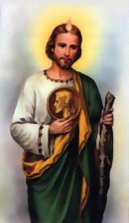
Most of the interesting commentary regarding the new apostolic constitution that I've read is at Fr. Longenecker's blog. One thing that he said that I think is MOST appropriate, is that we should all pray for God's grace to flood over this process. St. Jude, we thought for so long that this day could never come. Remind us that with God, all things are possible, and pray for us all!
I don't have time to keep up with Father Z over at What Does The Prayer Really Say, but he has a lot to say, and more commenters than Father Dwight.
But he is doing more than that. With the new apostolic constitution providing Personal Ordinariates for converts from the Church of England (Inside the Vatican Article), he is also deliberately marginalizing heterodox bishops. And I approve of his desire to do so.
Now, I can forsee the possibility that these Personal Ordinariates could one day protect heterodoxy, but if that happens, then the Pope (whoever it is by then) can eliminate them.
Most of the interesting commentary regarding the new apostolic constitution that I've read is at Fr. Longenecker's blog. One thing that he said that I think is MOST appropriate, is that we should all pray for God's grace to flood over this process. St. Jude, we thought for so long that this day could never come. Remind us that with God, all things are possible, and pray for us all!
I don't have time to keep up with Father Z over at What Does The Prayer Really Say, but he has a lot to say, and more commenters than Father Dwight.
Labels:
blogrollin',
conversion,
St. Jude
Monday, October 19, 2009
A New World Record
Nobody, but NOBODY, does more murdering than abortionists. Not the Commies, not the Nazis, not the Turks, not the War Between the States, not even influenza.
None of those has passed the 1 Billion (1,000,000,000) Mark. Abortion has.
Is it any wonder that Mother Teresa made so much effort to constantly remind people, "[T]he greatest destroyer of love and peace is abortion."
For your stack of quotes:
"Any country that accepts abortion is not teaching the people to love, but to use any violence to get what they want. That is why the greatest destroyer of love and peace is abortion." -- Mother Teresa
"It is a poverty to decide that a child must die so that you may live as you wish." -- Mother Teresa
None of those has passed the 1 Billion (1,000,000,000) Mark. Abortion has.
Is it any wonder that Mother Teresa made so much effort to constantly remind people, "[T]he greatest destroyer of love and peace is abortion."
For your stack of quotes:
"Any country that accepts abortion is not teaching the people to love, but to use any violence to get what they want. That is why the greatest destroyer of love and peace is abortion." -- Mother Teresa
"It is a poverty to decide that a child must die so that you may live as you wish." -- Mother Teresa
Labels:
collectivism,
culture of death,
evil,
inhumanism,
the Shoah
Tuesday, October 6, 2009
Meddling with Prices: Subsidies
The government may provide a subsidy. One of the most prominent examples these days is The Scooter Store. Tax money is diverted to scooters, increasing the seller's revenue while reducing or eliminating the buyer's cost. Consumers are more likely to buy, and not likely to hunt for bargains. Producers have an incentive to make more, but not to cut costs or prices. They both win, as do the government employees who administer the program. The losers are everyone who would have liked to use their tax money for something besides buying a scooter for somebody else, and anyone who competes with scooter manufacturers for land, employees, and raw materials.
Health care is rife with subsidies. This article by David Goldhill tells many of the ways that health care costs are diverted from people who get health care to others, and the problems this causes. When the customer isn't paying, he doesn't bother to look for a bargain. When the supplier knows he's going to get paid no matter what he does, he has no incentive to cut costs or improve quality. Mr. Goldhill's story about handwashing is a perfect example.
The housing crisis is also a case of subsidies causing problems. Fannie Mae and Freddy Mac are both federally subsidized companies that would promised to buy risky home mortgages from banks. Basically, they told the banks, "Make a loan to anybody who has a pulse and fills out an application. It doesn't matter if they've never paid off anything in their lives, or if the monthly payment would be twice their monthly income. If they don't pay it back, the government will buy the mortgage from you and collect the money from the borrowers." Artificially increased demand caused artificial increases in price. The artificial increases in price drew extra people into home construction. Most people who were getting the loans and knew they couldn't pay them off didn't care. They figured somebody else would come along before disaster struck and buy the home from them for enough to pay off the entire mortgage and put some money in their pockets besides.
Fannie Mae and Freddy Mac started running out of tax money to buy up bad loans, so they started selling their loans to investors and banks as "innovative mortgage-backed securities." They, and the banks, treated these MBS as part of their capital base. This meant that they could count them as part of their 3%-5% of assets that they actually have to keep on hand to pay depositors and creditors. The value of these things is hard to determine. What people are willing to pay for them at any moment may be a far, far cry from how much money they would bring in if you held on to them. The Federal Accounting Standards Board prefers that assets be valued at what people last paid for it.
How does this work? Imagine a mutual fund, whose primary asset is 10,000 mortgages, that the mutual fund company bought from Fannie Mae. Let's call it "Fannie's Upstanding Collection of Homeowners" and assign it the symbol, FUCHXX. They sell 10,000,000 shares of this agglomeration of mortgages. Your bank buys 10,000 shares of FUCHXX at $40. So they have $400,000 in FUCHXX. They count it as a $400,000 asset, even though they expect it to eventually pay them $800,000 in dividends. Then they loan out $8 million on the strength of that asset, most of which they borrowed.
News comes out that the default rate on Fannie Mae mortgages is absurdly high. Nobody is willing to buy anything based on them. FUCHXX drops to $8 a share. Your bank now has to count it as an $80,000 asset. This means it now has to either come up with another $320,000 in assets, or buy back $6.4 million in loans. Your bank is in big trouble.
That is about what happened to cause the banking crisis that launched the $700,000,000,000 Troubled Asset Recovery Program of President Bush, and the (far larger) "stimulus" package that was recently passed by the Democrat Party and President Obama. Neither of these does much to address the real problem: people were given mortgages they couldn't afford to pay off, and builders built far more houses than people would have bought if they had been limited to mortgages they could afford. The artificially high supply of mortgages is gone, leaving banks and taxpayers holding the bag. The money can't be made back by selling the houses, either. The artificially high demand for homes is gone too, leaving them worth much less than the defaulted mortgages for which they are collateral.
In this series:
Supply, Demand, and Price | Price Caps | Price Supports | Restricting Supply | Excises | Subsidies
Health care is rife with subsidies. This article by David Goldhill tells many of the ways that health care costs are diverted from people who get health care to others, and the problems this causes. When the customer isn't paying, he doesn't bother to look for a bargain. When the supplier knows he's going to get paid no matter what he does, he has no incentive to cut costs or improve quality. Mr. Goldhill's story about handwashing is a perfect example.
The housing crisis is also a case of subsidies causing problems. Fannie Mae and Freddy Mac are both federally subsidized companies that would promised to buy risky home mortgages from banks. Basically, they told the banks, "Make a loan to anybody who has a pulse and fills out an application. It doesn't matter if they've never paid off anything in their lives, or if the monthly payment would be twice their monthly income. If they don't pay it back, the government will buy the mortgage from you and collect the money from the borrowers." Artificially increased demand caused artificial increases in price. The artificial increases in price drew extra people into home construction. Most people who were getting the loans and knew they couldn't pay them off didn't care. They figured somebody else would come along before disaster struck and buy the home from them for enough to pay off the entire mortgage and put some money in their pockets besides.
Fannie Mae and Freddy Mac started running out of tax money to buy up bad loans, so they started selling their loans to investors and banks as "innovative mortgage-backed securities." They, and the banks, treated these MBS as part of their capital base. This meant that they could count them as part of their 3%-5% of assets that they actually have to keep on hand to pay depositors and creditors. The value of these things is hard to determine. What people are willing to pay for them at any moment may be a far, far cry from how much money they would bring in if you held on to them. The Federal Accounting Standards Board prefers that assets be valued at what people last paid for it.
How does this work? Imagine a mutual fund, whose primary asset is 10,000 mortgages, that the mutual fund company bought from Fannie Mae. Let's call it "Fannie's Upstanding Collection of Homeowners" and assign it the symbol, FUCHXX. They sell 10,000,000 shares of this agglomeration of mortgages. Your bank buys 10,000 shares of FUCHXX at $40. So they have $400,000 in FUCHXX. They count it as a $400,000 asset, even though they expect it to eventually pay them $800,000 in dividends. Then they loan out $8 million on the strength of that asset, most of which they borrowed.
News comes out that the default rate on Fannie Mae mortgages is absurdly high. Nobody is willing to buy anything based on them. FUCHXX drops to $8 a share. Your bank now has to count it as an $80,000 asset. This means it now has to either come up with another $320,000 in assets, or buy back $6.4 million in loans. Your bank is in big trouble.
That is about what happened to cause the banking crisis that launched the $700,000,000,000 Troubled Asset Recovery Program of President Bush, and the (far larger) "stimulus" package that was recently passed by the Democrat Party and President Obama. Neither of these does much to address the real problem: people were given mortgages they couldn't afford to pay off, and builders built far more houses than people would have bought if they had been limited to mortgages they could afford. The artificially high supply of mortgages is gone, leaving banks and taxpayers holding the bag. The money can't be made back by selling the houses, either. The artificially high demand for homes is gone too, leaving them worth much less than the defaulted mortgages for which they are collateral.
In this series:
Supply, Demand, and Price | Price Caps | Price Supports | Restricting Supply | Excises | Subsidies
Labels:
collectivism,
force,
foundational economics,
prices
Monday, October 5, 2009
Meddling with Prices: Excises
The government may impose taxes on the purchase or sale of a product. The taxes get added to the buyer's cost, but not the seller's revenue. This has the effect of reducing both supply and demand, and also diverting both to alternatives that cost more to make, do the job less well, or both. This is done with sugar, and the business that sugar would get is diverted to corn syrup or other corn sweeteners. The IRS, corn farmers, and Archer Daniels Midland win. Sugar cane and sugar beet farmers, sugar refiners, everyone who likes sugar better than corn syrup, and anyone competing with corn syrup buyers for corn products, loses. Further losses are imposed by transaction costs.
President Obama's "Cap and Trade" scheme is another example of this. By greatly increasing the cost of combustion-generated electricity, he drives electrical utilities towards so-called "renewable" resources that either are far more expensive, far less reliable, have far greater impacts on local ecologies, or all of these.
In this series:
Supply, Demand, and Price | Price Caps | Price Supports | Restricting Supply | Excises | Subsidies
President Obama's "Cap and Trade" scheme is another example of this. By greatly increasing the cost of combustion-generated electricity, he drives electrical utilities towards so-called "renewable" resources that either are far more expensive, far less reliable, have far greater impacts on local ecologies, or all of these.
In this series:
Supply, Demand, and Price | Price Caps | Price Supports | Restricting Supply | Excises | Subsidies
Labels:
force,
foundational economics,
prices
Thursday, October 1, 2009
Meddling with Prices: Restricting Supply
The government may restrict supply, but leave the price free. This drives prices up. Approved providers win. Everyone else loses. This also reduces innovation. There are many, many markets where supply is artificially restricted. Franklin Delano Roosevelt did his best to restrict the supply of food during the height of the Depression, even when many people were struggling to feed themselves. He also used price supports. Real estate markets are restricted by zoning. And a vast array of professions are limited in supply by licensing. And the tighter licensing always results in more people, not less, either doing without or trying to do difficult or dangerous things themselves. For example, the more difficult it is to become an electrician, the fewer people become one. The fewer electricians there are, the more they charge. The more it costs to hire an electrician, the more people are too poor to afford one. The more people who can't afford an electrician, the more try to do electrical work themselves. The more unqualified people do their own electrical work, the more electrocutions there are.
Another example of restricting supply is the Cash for Clunkers program. Cars that get traded in are destroyed (see video), no matter how pristine and useful they may be. This reduces the supply of cars, driving prices higher.
In this series:
Supply, Demand, and Price | Price Caps | Price Supports | Restricting Supply | Excises | Subsidies
Another example of restricting supply is the Cash for Clunkers program. Cars that get traded in are destroyed (see video), no matter how pristine and useful they may be. This reduces the supply of cars, driving prices higher.
In this series:
Supply, Demand, and Price | Price Caps | Price Supports | Restricting Supply | Excises | Subsidies
Labels:
force,
foundational economics,
prices
Monday, September 28, 2009
Meddling with Prices: Supports
Price supports involve the government increasing the price, above market equilibrium, and promising to buy up any extra. Obviously, producers make more, while consumers buy less, and the extra is either given away or otherwise wasted. In the meantime, money is taken from everyone as taxes and given to the producers. In the end, everyone loses except the producers (and the government employees who are paid to buy and waste the excess product).
Minimum wages are a bit different from other price supports. Rather than leading to excess production of labor, it leads to under-utilization of the labor supply, which shows up as unemployment. You might think that the government does not pay people not to work, but it does. There is unemployment insurance, disability, WIC and AFDC. While the recipients of these benefit somewhat, it is labor unions that benefit greatly. Union contracts do not set wages at $X per hour, but rather at "Minimum wage + $Y per hour." So the most recent round of minimum wage increases, from $5.15/hr to $7.25/hr over three years, has resulted in American labor unions getting a $2.10/hr raise, that they did not have to negotiate for.
The biggest losers when it comes to minimum wages are those who are not able to produce more than it costs to employ them. Examples include young blacks, who usually do not get as good an education as young whites; single mothers, who must have more flexibility in their work schedule; and the handicapped, for whom all manner of accomodations must be made, and who may not be able to do physical labor as well. Other losers include those who would otherwise hire these low-productivity workers. They have typically gotten their customers to take the place of such workers, by "offering" the "convenience" of self-service checkouts, drink refills, gasoline pumping and windshield cleaning. Another group that loses out because of minimum wages are those who would prefer to get paid with something other than cash -- minimum wages pretty much prohibit apprenticeship, as an example.
In this series:
Supply, Demand, and Price | Price Caps | Price Supports | Restricting Supply | Excises | Subsidies
Minimum wages are a bit different from other price supports. Rather than leading to excess production of labor, it leads to under-utilization of the labor supply, which shows up as unemployment. You might think that the government does not pay people not to work, but it does. There is unemployment insurance, disability, WIC and AFDC. While the recipients of these benefit somewhat, it is labor unions that benefit greatly. Union contracts do not set wages at $X per hour, but rather at "Minimum wage + $Y per hour." So the most recent round of minimum wage increases, from $5.15/hr to $7.25/hr over three years, has resulted in American labor unions getting a $2.10/hr raise, that they did not have to negotiate for.
The biggest losers when it comes to minimum wages are those who are not able to produce more than it costs to employ them. Examples include young blacks, who usually do not get as good an education as young whites; single mothers, who must have more flexibility in their work schedule; and the handicapped, for whom all manner of accomodations must be made, and who may not be able to do physical labor as well. Other losers include those who would otherwise hire these low-productivity workers. They have typically gotten their customers to take the place of such workers, by "offering" the "convenience" of self-service checkouts, drink refills, gasoline pumping and windshield cleaning. Another group that loses out because of minimum wages are those who would prefer to get paid with something other than cash -- minimum wages pretty much prohibit apprenticeship, as an example.
In this series:
Supply, Demand, and Price | Price Caps | Price Supports | Restricting Supply | Excises | Subsidies
Labels:
force,
foundational economics,
prices
Saturday, September 26, 2009
Meddling With Prices: Caps
The government may set a price that is artificially low, that is, below what demand would currently cause. Richard Nixon did this, with gasoline, in response to the 1973 oil embargo. Because prices were low, there was no reason to make up for the drop in supply. Also, there was very little reason for people to try to conserve gasoline. The result was that demand greatly outstripped supply, leading to shortages. Then rationing was added, which imposed extra costs on buyer, seller, and the government. Gas lines were a fact of life throughout the 70s as a result of all this meddling. The winners were public officials who claimed "I DID something about the high price of gasoline," people who sold their extra gas rationing coupons, and gas station attendants who took bribes to let people buy when the rationing schemes were against them. The losers were everyone who waited in line for gasoline, and everyone who didn't make and sell more gasoline because the price wasn't high enough.
Rent controls do the same sort of thing. Supply is reduced, while demand is increased. The winners are politicians and people who live in rent-controlled housing. There is a long list of losers. First are the rent-controlled landlords, who cannot raise prices to deal with increases in their costs. Second are their tenants. Because their landlords are making little or no money, they often have to forgo ordinary maintenance and sometimes even vital repairs. Third are developers, who don't bother to develop new housing because the rents will be held below what they'd need to make their money back and a living. Fourth is the city, which doesn't get the property taxes from the properties the developers don't make. But the ones who suffer most are the people who cannot get a home. Some go homeless. Most go to live somewhere else. You get long lists of people waiting for homes instead of long lines waiting for gas, but the basic problems -- shortage and waiting -- are the same. And you get the other typical problem, which is essentially a black market. In the case of housing, this is a giant up-front fee charged by the landlord in order to finalize a lease.
In this series:
Supply, Demand, and Price | Price Caps | Price Supports | Restricting Supply | Excises | Subsidies
Rent controls do the same sort of thing. Supply is reduced, while demand is increased. The winners are politicians and people who live in rent-controlled housing. There is a long list of losers. First are the rent-controlled landlords, who cannot raise prices to deal with increases in their costs. Second are their tenants. Because their landlords are making little or no money, they often have to forgo ordinary maintenance and sometimes even vital repairs. Third are developers, who don't bother to develop new housing because the rents will be held below what they'd need to make their money back and a living. Fourth is the city, which doesn't get the property taxes from the properties the developers don't make. But the ones who suffer most are the people who cannot get a home. Some go homeless. Most go to live somewhere else. You get long lists of people waiting for homes instead of long lines waiting for gas, but the basic problems -- shortage and waiting -- are the same. And you get the other typical problem, which is essentially a black market. In the case of housing, this is a giant up-front fee charged by the landlord in order to finalize a lease.
In this series:
Supply, Demand, and Price | Price Caps | Price Supports | Restricting Supply | Excises | Subsidies
Labels:
force,
foundational economics,
prices
Friday, September 25, 2009
Obama's Gag Order
If there's anything that tells me ObamaCare is a really, really bad idea, it's this:
Reforms that increase liberty, freedom, choice, and options from the Cato Institute.
President Forbids Insurance Companies to Tell Their Customers What Changes ObamaCare Would Bring
EDIT:
Check out this article as well. The money quote:As if to drive the point home, the Department of Health and Human Services issued a gag order this week telling all private companies participating in the Medicare Advantage program to shut up. Violators would face fines and jail time. Forget the First Amendment.
The gag order was issued after Humana Corp. sent a letter to its policyholders who participate in Medicare Advantage telling them the facts about Obamacare’s effect on the program. The companies were ordered “to end immediately all such mailings to beneficiaries and to remove any related materials directed to Medicare enrollees from your website.”
The bureaucrats added this blunt threat: “Please be advised that we take this matter very seriously and, based upon the findings of our investigation, will pursue compliance and enforcement actions. ….”
Those, my friends, are the words of soft tyranny. How much longer before it becomes a hard tyranny?
Reforms that increase liberty, freedom, choice, and options from the Cato Institute.
Labels:
collectivism,
culture of death,
evil,
force,
inhumanism
Thursday, September 24, 2009
Supply, Demand, and Price
As a schoolboy, I was taught that demand has a direct relationship to price, and that supply has an inverse relationship to price. Chances are very good that you were taught the same. And it's important to know how supply and demand affect price, but that is very far from being the whole story. Price affects supply and demand, as well.
This is the core of the free market system. Prices are allowed to move freely, so people know what use of their resources will bring them the most money. And, all other things being equal, that is what they do. It all works really well until somebody (that is, the government) starts meddling with prices.
EDIT: this really was too much to do at once. I have decided to break the giant wall of text into several posts.
In this series:
Supply, Demand, and Price | Price Caps | Price Supports | Restricting Supply | Excises | Subsidies
The Laws of Supply, Demand, and Price
- Increases in supply cause downward pressure on price.
- Decreases in supply cause upward pressure on price.
- Increases in demand cause upward pressure on price.
- Decreases in demand cause downward pressure on price.
- Increases in price tend to attract more resources to production.
- Decreases in price tend to divert resources away from production.
- Increases in price tend to reduce demand.
- Decreases in price tend to stimulate demand.
This is the core of the free market system. Prices are allowed to move freely, so people know what use of their resources will bring them the most money. And, all other things being equal, that is what they do. It all works really well until somebody (that is, the government) starts meddling with prices.
EDIT: this really was too much to do at once. I have decided to break the giant wall of text into several posts.
In this series:
Supply, Demand, and Price | Price Caps | Price Supports | Restricting Supply | Excises | Subsidies
Labels:
deregulation,
force,
foundational economics,
laissez-faire,
prices
Saturday, September 19, 2009
Health Care Reform
I believe that the health care reforms being suggested are very, very bad. I have formed a deep and powerful mistrust of any government-run institution. For starters, there's Papa Ben's blanket statement that a bureaucracy cannot provide what is most needed, which is love. Further:
I found this article thanks to a combox post over on Father Longenecker's blog. The author, David Goldhill, does an excellent job of explaining why our health care system is so dysfunctional.
A synopsis, if you think it's too long to read, boils down to the King of Id's Golden Rule: Who has the gold, makes the rules. We are not the ones who provide the gold, so we do not make the rules. Medicare, Medicaid, your HMO, Blue Cross/Blue Shield, and other insurers are the ones who make the rules. And they make those rules, whether they mean to or not, to benefit themselves. Any benefit we receive is almost an accidental by-product.
I may not agree completely with Goldhill's proposed solutions; I have not yet given them enough thought. But I think he has his pinpointed the systemic root of the problems that most strongly draw our attention.
"Bureaucratic Rule of Two: Removal of an activity from the private to the public sector will double its unit cost of production." -- Thomas Borcherding, BUDGETS AND BUREAUCRATS: THE SOURCES OF GOVERNMENT GROWTH
I found this article thanks to a combox post over on Father Longenecker's blog. The author, David Goldhill, does an excellent job of explaining why our health care system is so dysfunctional.
A synopsis, if you think it's too long to read, boils down to the King of Id's Golden Rule: Who has the gold, makes the rules. We are not the ones who provide the gold, so we do not make the rules. Medicare, Medicaid, your HMO, Blue Cross/Blue Shield, and other insurers are the ones who make the rules. And they make those rules, whether they mean to or not, to benefit themselves. Any benefit we receive is almost an accidental by-product.
I may not agree completely with Goldhill's proposed solutions; I have not yet given them enough thought. But I think he has his pinpointed the systemic root of the problems that most strongly draw our attention.
Labels:
deregulation,
force,
laissez-faire
Subscribe to:
Posts (Atom)

Franciscan Family Apostolate